
Semax Research Spray | ACTH(4-7)-PGP Neuroprotective Heptapeptide
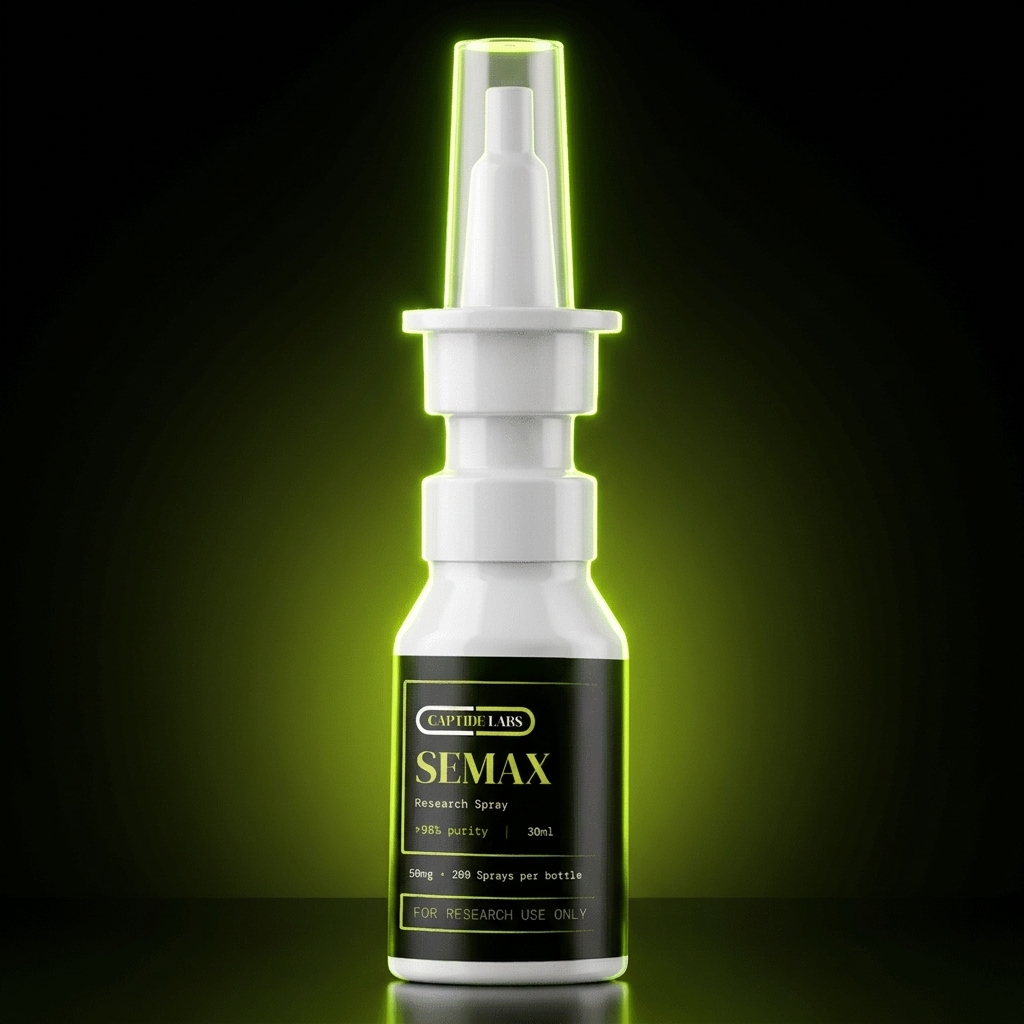
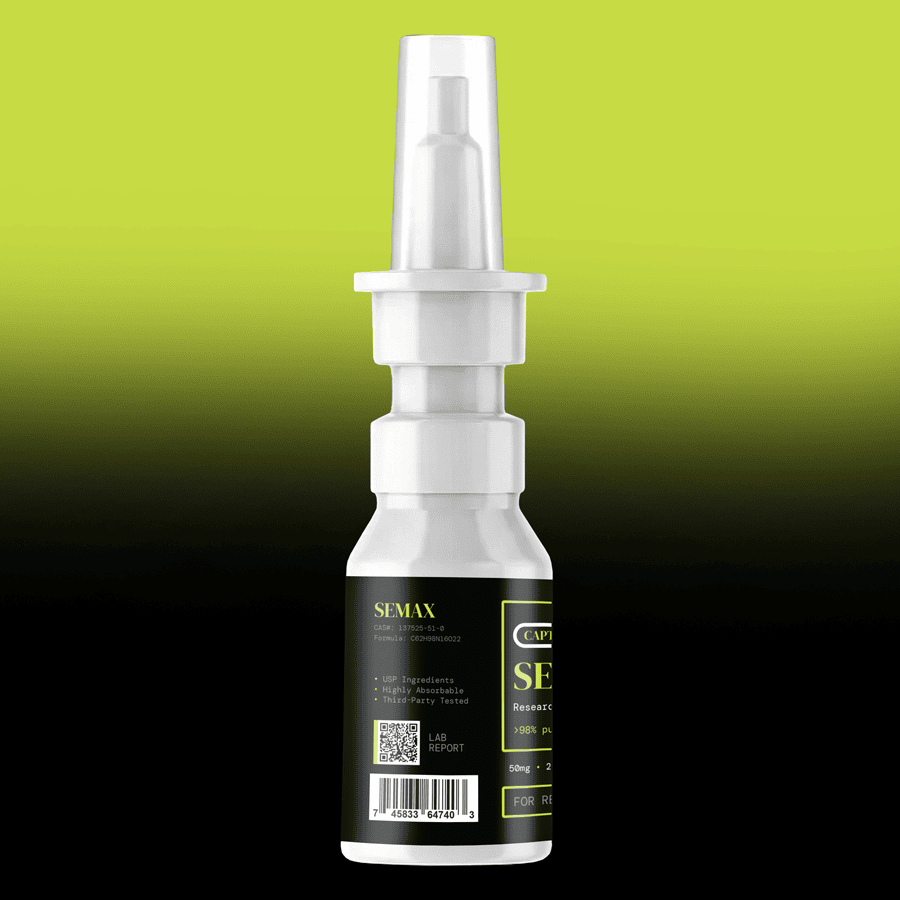
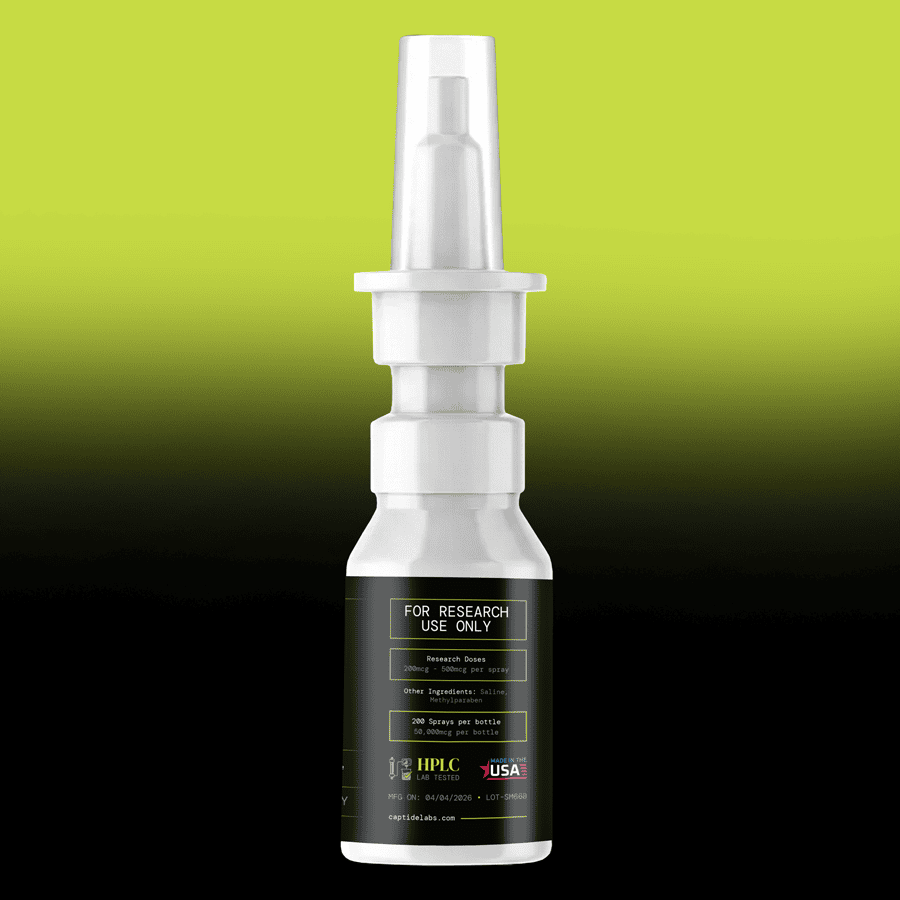
Captide Labs Semax Spray delivers research-grade Semax in a pre-formulated, ready-to-use liquid spray format. Each 30ml bottle contains 50mg of Semax at greater than 98% purity, independently verified by HPLC-MS analysis and documented with a full Certificate of Analysis. Concentration is 1.67mg/ml, with each actuation delivering approximately 200–500mcg depending on application protocol.
Semax (CAS 80714-61-0, also known as ACTH(4-7)-PGP or Met-Glu-His-Phe-Pro-Gly-Pro) is a synthetic heptapeptide analogue of the ACTH(4–7) melanocortin core, extended with a Pro-Gly-Pro C-terminal motif that confers metabolic stability against carboxypeptidases. Originally developed at the Institute of Molecular Genetics of the Russian Academy of Sciences in the late 1980s, it has been studied extensively for its neuroprotective and nootropic properties — with particular research interest in BDNF/NGF modulation, ischemic stroke recovery models, dopaminergic and serotonergic signaling, and cognitive function. It is registered as a prescription drug in Russia for neurological indications and remains one of the most extensively researched peptides in the contemporary neuroscience literature.
What is Semax?
Semax is a synthetic heptapeptide derived from a fragment of adrenocorticotropic hormone (ACTH). Specifically, it corresponds to the ACTH(4–7) segment — Met-Glu-His-Phe (the melanocortin core of the parent hormone) — extended with a Pro-Gly-Pro C-terminal sequence. The parent ACTH(4-7) tetrapeptide alone is pharmacologically impossible — it survives in plasma for only seconds. The Pro-Gly-Pro tail is chemically simple but functionally revolutionary: it blocks the carboxypeptidases that would otherwise destroy the peptide and allows enough residence time for nose-to-brain transport, receptor engagement, and downstream gene-expression effects. Critically, Semax does not reproduce the endocrine/hormonal activity of full-length ACTH — it lacks adrenocortical-stimulating activity, making it a clean neurotrophic and neuroprotective research tool.
First developed at the Institute of Molecular Genetics of the Russian Academy of Sciences in the late 1980s, Semax has been approved as a prescription drug in Russia for neurological indications including ischemic stroke recovery, cognitive disorders, and optic nerve disease. Outside of Russia and Eastern Europe, Semax is distributed as a research compound, with an active body of preclinical and clinical literature exploring its mechanisms across neurotrophic, neuroprotective, cognitive, and behavioral research models.
Areas of Active Semax Investigation
BDNF & Neurotrophic Factor Modulation
One of the most consistently reported findings in Semax research is its ability to rapidly elevate brain-derived neurotrophic factor (BDNF) and its signaling receptor TrkB in the hippocampus. BDNF is a key regulator of neuronal survival, synaptic plasticity, and neurogenesis. Rodent studies have reported time-dependent upregulation of BDNF and NGF gene expression in hippocampal and frontal cortical tissue following Semax administration, making it a useful research tool for investigating neurotrophic factor signaling under controlled experimental conditions.
Neuroprotection & Ischemic Stroke Research
Semax has been studied extensively in ischemia models, with genome-wide transcriptional analyses (Filippenkov et al.) reporting broad Semax-associated changes in gene expression across immune- and vascular-system related gene sets in brain tissue following focal cerebral ischemia. Preclinical studies have reported increased tolerance to hypoxia, reduced cortical nitric oxide production, reduced inflammatory markers, and enhanced functional recovery in ischemia-exposed subjects — supporting its use as a research tool in neurovascular and neuroinflammatory pathway investigation.
Dopaminergic & Serotonergic System Research
Semax has been shown to activate dopaminergic and serotonergic brain systems in rodent models, with studies reporting increased serotonin turnover and potentiation of dopamine-related effects following administration. Researchers have used Semax in behavioral models to investigate antidepressant-like and anxiolytic-like activity, stress-response attenuation, and the interplay between neurotrophic signaling and monoaminergic neurotransmission — including elevated plus maze studies in maternal deprivation-induced anxiety models.
Cognitive Function & Neuroplasticity
Preclinical and clinical literature reports Semax-associated improvements in memory, attention, and information processing across a range of experimental paradigms. Imaging studies have documented changes in the rostral subcomponent of the brain’s default mode network (DMN), providing structural correlates for observed cognitive readouts. Semax has also been investigated in developmental models examining its influence on synaptic plasticity markers and long-term potentiation in controlled settings.
Melanocortin Receptor Interaction
As an ACTH-derived fragment containing the melanocortin core (Met-Glu-His-Phe), Semax has been investigated for potential interactions with melanocortin receptors — particularly MC4R and MC5R. Experimental evidence suggests Semax may act as a partial agonist or competitive ligand at these receptors, which are involved in energy regulation, inflammation, and CNS signaling. This receptor interaction profile makes Semax a useful tool in studies examining melanocortin system function distinct from full ACTH’s hormonal effects.
Enkephalinase Inhibition & Endogenous Opioid Tone
Semax has been reported to inhibit enkephalinase activity, the enzyme responsible for degrading endogenous enkephalins (small opioid neuropeptides involved in pain modulation, mood, and stress response). This mechanism may underlie part of Semax’s reported analgesic and anxiolytic activity in preclinical models, and is a shared mechanism with the structurally related research peptide Selank — making them frequently co-investigated in studies of endogenous opioid system function.
Frequently Asked Questions
What is Semax used for in research?
What is the concentration of Semax in this spray?
How does Semax relate to ACTH?
What is the CAS number for Semax?
What is the difference between Semax and N-Acetyl Semax?
How should Semax Spray be stored?
For research use only. Not for human consumption, veterinary use, or food/agricultural applications. Not evaluated or approved by the FDA. Not intended to diagnose, treat, cure, or prevent any condition. All purchases are made with the understanding that this compound is strictly for in-vitro research and laboratory use. See the full Research Use Only (RUO) Policy.
Reviews
There are no reviews yet.